Saturday, 10 May 2014

My Mother's Work - Supportive

My Mother's Work - Supportive


A lining to a garment supports and improves the experience of wearing it andextends its life, and is symbolic of the way in which women's work supports,enhances and improves the quality of life for people around them.

The lining on this coat is used as an allegory to the consequences of my Mother'swork.  The wooden spoon used by my Mother, has a worn edge and is warped, from being immersed in boiling jam, during her 42 years of marriage.  Over this time, she made 3,200lbs of jam for the benefit of her family.  While the coat is being worn, the high quality lining is unseen but supportive.  When the coat is removed, the lining is visible and gives voice to both the volume of workcompleted and the impact upon the implement used.

The silk satin lining of this 1960s original coat is designed to give feelings of warmth and affection towards all women who are remembered and recognised for their role in supporting their families.

My Mother's Work - Supportive

My Mother's Work - Cyclical

My Mother's Work - Cyclical


My Mother found being a homemaker to be cyclical in many ways - daily repetition of preparing and clearing up after meals, weekly cycles of cleaning and caring, and annual cycles of preserving and baking for seasonal celebrations.

Within the kitchen, there are many utensils that have a round shape that symbolises the cyclical nature of women's work - mixing bowls, saucepans, plates, cups, colanders, and plug holes.  Manual utensils have been hand drawn and printed on round tea towels.  Cross stitched words link the emotional feeling  of using specific utensils to describe the consequences of cooking processes she carried out, while also  recognising the value of her role and that the cycle continues rotating.
My Mother's Work - Cyclical

My Mother's Work - Unfinished

My Mother's Work - Unfinished


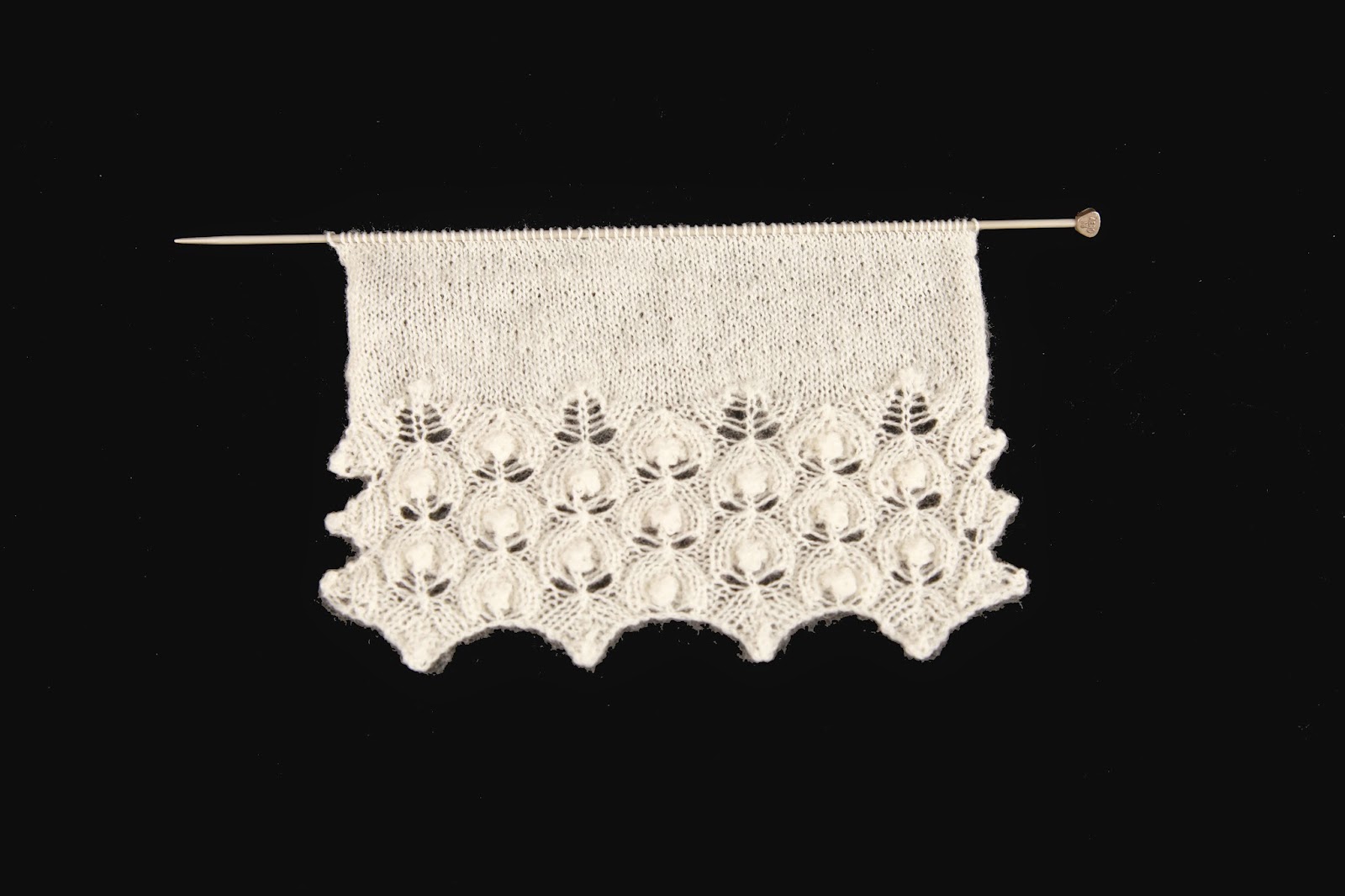
This collection of knitted pieces arose from a conversation in my favourite wool shop.  I was admiring the christening shawl pattern and laceweight wool chosen by a group of Polish ladies, who I discovered were migrant workers.

We were discussing the complicated pattern for the christening shawl and laughing about how long it would take to make.  I said the baby at the centre of the ceremony would be unaware of the time and effort put into making the complicated and delicate knitting.  One of the Polish ladies commented that it was unusual to have someone comment on their skills to be able to make such a shawl, as normally a shawl was admired only when complete, and wrapped around a new baby.  I reflected on how work typically carried out by women, often required high levels of skill, but while incomplete, was unacknowledged.  I also mused on how marginalised and minority people are frequently unrecognised for their skills, and decided to create some knitted pieces, where the most highly skilled work was positioned on a margin, as a border.

These knitted samples celebrate the quiet practice of women, like my Mother, who used their unsung and unrecognised skills for the benefit of others.

My Mother's Work - Unfinished

My Mother's Work - Unending

My Mother's Work - Unending


This collection of roller towels demonstrates the unending nature of women's work.  The roller towels emulate the style of a traditional glass cloth, and the printed words focus on the work involved in cooking.

The first roller towel is a classic length and the printed words describe making a cake.  The second roller towel describes making a shepherds pie and reaches the floor, indicating how repetitive meal making can make a cook feel dragged down.  The last roller towel is about making a lemon merengue, which was her son's favourite pudding, but gives the realisation that my Mother's work was unending!

The embroidered words on the body of work are phrases that my Mother used repeatedly.  She truly believed that "Vegetables need to be cooked thoroughly" and that "Gravy won't be nice without Bisto" and these sayings are celebrated in family storytelling, ensuring her legacy cannot be forgotten!

My Mother's Work - Unending

Artist statement: My Mother's Work - Unseen

My Mother's Work - Unseen


This collection of 64 jam jar covers refers to the quantity of jam made by my Mother each year, for the 42 years of her marriage.  Utensils that are used to make jam have been hand drawn, then sections of these drawings have been machine embroidered on jam covers.

Every year, my Mother would pick raspberries, strawberries, blackcurrants and blackberries, then wash the fruit and make the jam.  She always commented that jam making took place at the hottest time of year and made her legs ache.  The jam would be consumed, and the high quality produce would disappear.

Only the jam covers remain to give memory to her labour.


Embroidered jam covers, prior to being staged

Friday, 9 May 2014

Final notes for the sketchbook

My Mother's Work - Supportive

How the Concept fits the object:  A lining to a garment supports and improves the experience of wearing it and extends it's life, similar to the way in which women's work supports enhances and improves the experience of living to those around her.

How the work evolved: originally this concept was to be applied to upholstery for a rocking chair or settee, to play on how women's work cushions and supports against life's hardships.  However, I discovered I did not have the skills to hand stitch the quilting on the detachable cushions to my chair, and did not have the furniture renovation skills to strip a wooden ercol settee.  However, I did have a 1960s original coat belonging to my Mother, and the concept was tweaked to support and enhance, rather than support and cushion.

Skills developed:  Pattern cutting - turned coat inside out and measured all dimensions of lining.  1960s patterns are cut with more shaping than modern coat patterns!

Difficulties overcome:  I was reluctant to give up on the idea to work on larger scale items, but concluded my skills were not up to the image I had in my mind's eye.

Key artistic influences:  Georgio Morandi - drawing style.  Stephen Cohen, A seat for the rich on the lap of the poor (chair upholstered with fabric where the imagery comments on the object).

Thursday, 8 May 2014

Staging takes forever

I went to uni on Monday intending to practice staging 3 of my pieces.  Famous last words!  I managed to stage one, and concluded that I am not a good maker!

I was staging my lined coat.  First I discovered the magnet hooks I had purchased, were not the ones I had ordered.  I had ordered 10 3kg magnets and the company supplied 20 x 1.5 kg magnets.  The coat is considerably heavier than I anticipated, and it took 6 magnets to be strong enough to support it from the ceiling.  Also, I noticed that I had a small stain beside the embroidered numbers, probably from the soluble canvas I used to stitch the cross stitch accurately.  And despite carefully creating an accurate pattern before cutting the fabric, the lining hem does not sit right.  More careful stitching required!  Also I had the coat staged far too high, so next time I hang it, the fishing line needs to be a lot longer, so it is positioned closer to eye level.  All this experimentation took all day!